A Moorland Story - creating a focal point in a studio.
Updated: 6 days ago

In a few day’s time it will be Hebden Bridge Open Studios weekend 2026. For 3 days I’ll be having full-on conversations about art and life with a whole lot of people I’ve mostly never met before, in a confined space.
Unlike in films and on TV, most artist I know don’t have great big spacious rooms full of light to work in. Our spaces, often in old industrial buildings, are small so that landlords can maximise profits.
I do feel lucky though as for the past 9 months so far, I’ve had the opportunity to rent an additional small room two doors down from my original modest studio. I decided to keep the first studio for painting and drawing and the new one for printmaking.
This makes sense for all sorts of reasons and a major one being the different disciplines require totally distict tools, equipment, paper and storage.
The situation does though present a new challenge for Open Studios as unfortunately I haven’t yet developed the ability to be in 2 rooms at the same time. I will probably have to keep moving between the spaces, depending on how busy it gets.
.
For the weekend it’s pleasing to have a focus artwork that tells a story visitors can relate to and chat about. This year in the print room I’ve decided to make a feature of one of my personal favourite woodcuts, Walshaw Dean in its Autumn colours..
The inspiration for making this woodcut came on a long moorland walk, partly on the Pennine Way from Hebden Bridge heading towards Haworth. After steadily climbing upwards from the Walshaw Dean reservoirs, I turned to have a rest and a look back at the path I had just come up.
An exhilarating, expansive vista was revealed and I knew straight away that I wanted to make and share an image conveying the sensation of freedom I always get when moving through the uplands.
Over the years I’ve acquired lots of attractive old equipment and Open Studios gives me a chance to display it to full advantage. I have a lovely early 20th century hardwood, double sided easel from an art school, which I bought from an outdoor market in Hebden Bridge.
I tried to negotiate down the price with the vendor but she was having none of it! She did agree to help me carry it back to my studio a few streets away, as being mahogany the easel is surprisingly heavy, so I consider that a good deal.

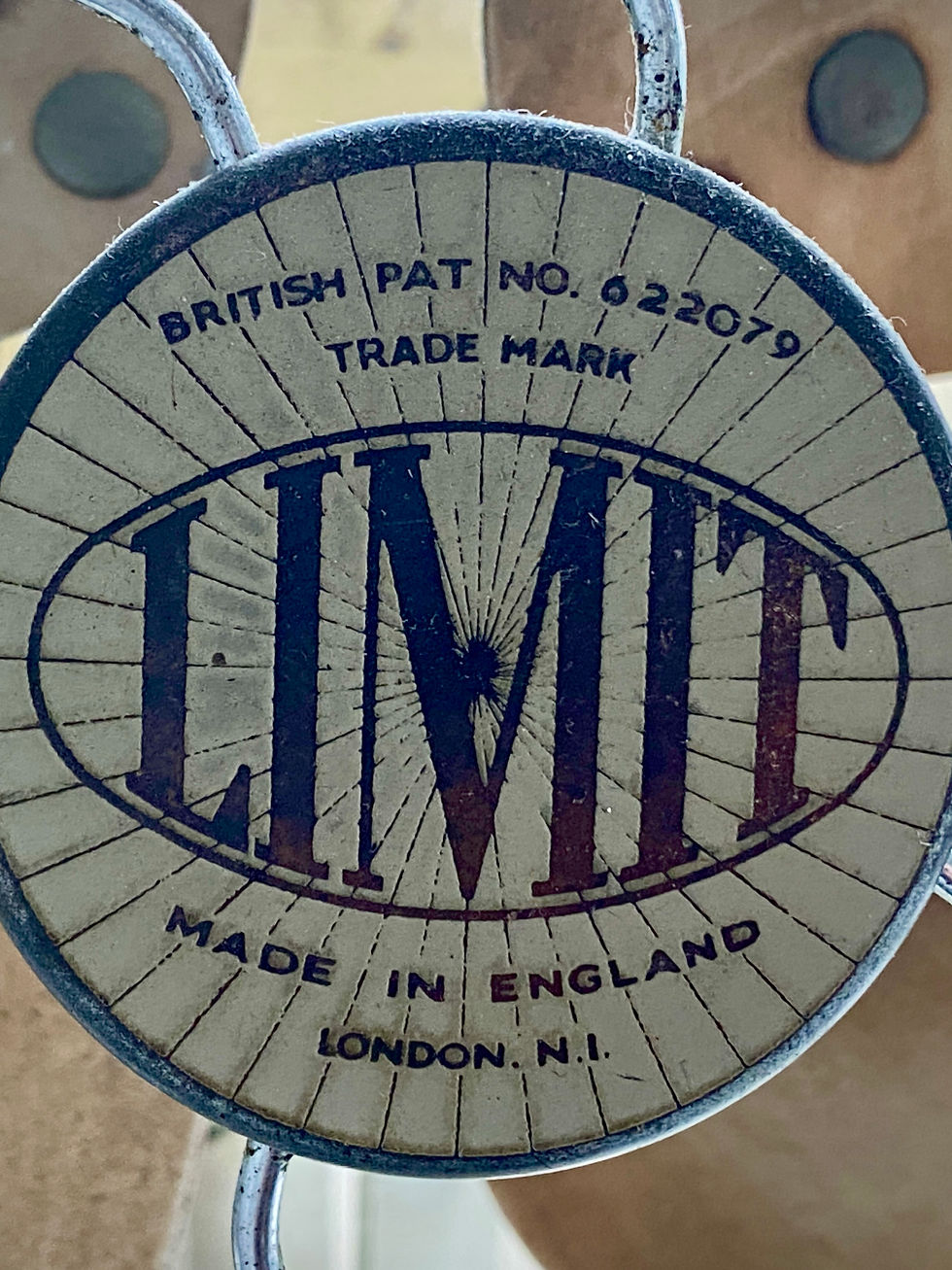
The label on the easel is rather fine. I’ve found out that the folk in Darlington who lived nearby or worked in the educational furniture factory referred to the place affectionately as ‘The Furney’.
Those workers in Darlington could feel justifiably proud of their craftsmanship, the quality of the easel stands out.
I rescued a couple of vintage wooden picture frames that originally came from my great-grandparents house. They spent over 35 years stored in a garage but are now having some time in the spotlight.
I’ve selected the easel and one of those frames to exhibit my large woodcut print of moorland and reservoirs at Walshaw Dean. This is the one chosen by publishers Little Toller Books to be the front cover of the 2025 anthology The Book Of Bogs.
I’ve placed my copy of the book in a box frame above the easel and hope this set-up may produce some magic. Selling art is a complete mystery. It’s OK though because I’ve enjoyed the process of putting everything together and feel satisfied with the visual result.

Displayed below the frames print is the block I carved to produce the print. It’s a sheet of plywood from a hardware store, nothing special. The block is very dark with ink stains from all the previous printing sessions (I only print a few at a time, by hand) so I’ve dusted the surface with French chalk to contrast and highlight the incised lines.
You can notice that the image on the block is a mirror image of the print - because that’s how printmaking works. You always have to remember to carve your image in reverse!

I usually print this block in either black or dark brown oil-based printing ink which is highly viscous and sticky like treacle. With a large ink Brayer I roll a thin layer onto a glass slab and then onto the plywood . Pressure transfers the ink to the smooth paper. It usually takes a few days to dry on the lovely off-white watercolour paper.
Later the whole sheet has to be briefly soaked in a water bath then taped to a flat board to dry again overnight or longer if the weather is damp. This ensures the paper will not buckle when I apply watercolour paint to bring the image alive. As you can imagine, all this is quite a process and explains why each print is uniquely different from all the others.

You can buy this print in either an Autumn or Spring version. It’s a variable edition of 100, meaning I can change the palette of watercolours used appropriate to the season. Here is a direct link to the woodcut print in my shop.